
Advanced Peptide Solutions for Enhanced Beauty and Wellness
Innovative Beauty Solutions


Primal Peptides specializes in advanced skincare formulations designed to optimize skin health and appearance through scientifically-backed peptide technology. Our comprehensive approach integrates cutting-edge research to facilitate visible results while maintaining the highest standards of quality and safety.
Advanced Beauty Solutions Empowering Your Natural Radiance
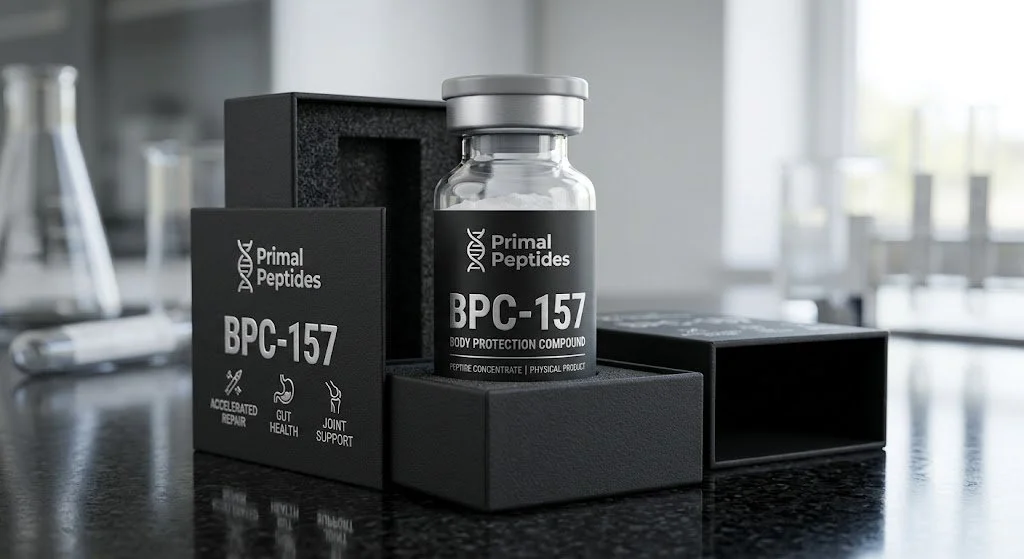
BPC-157: The Ultimate Recovery Compound BPC-157 is a synthetic peptide derived from a naturally occurring protective protein found in the digestive system. Widely researched for its regenerative properties, it is the go-to choice for targeted recovery and systemic support.
Key Benefits:
Accelerated Tissue Repair: Supports the rapid healing of muscles, tendons, and ligaments.
Joint & Mobility Support: Helps regulate inflammation to keep you moving comfortably and pain-free.
Gut Health: Promotes a healthy gastric lining and supports digestive wellness.
Enhanced Blood Flow: Encourages angiogenesis (the formation of new blood vessels) to deliver vital nutrients to damaged tissues.
BPC-157: The Ultimate Recovery Compound BPC-157 is a synthetic peptide derived from a naturally occurring protective protein found in the digestive system. Widely researched for its regenerative properties, it is the go-to choice for targeted recovery and systemic support.
Key Benefits:
Accelerated Tissue Repair: Supports the rapid healing of muscles, tendons, and ligaments.
Joint & Mobility Support: Helps regulate inflammation to keep you moving comfortably and pain-free.
Gut Health: Promotes a healthy gastric lining and supports digestive wellness.
Enhanced Blood Flow: Encourages angiogenesis (the formation of new blood vessels) to deliver vital nutrients to damaged tissues.
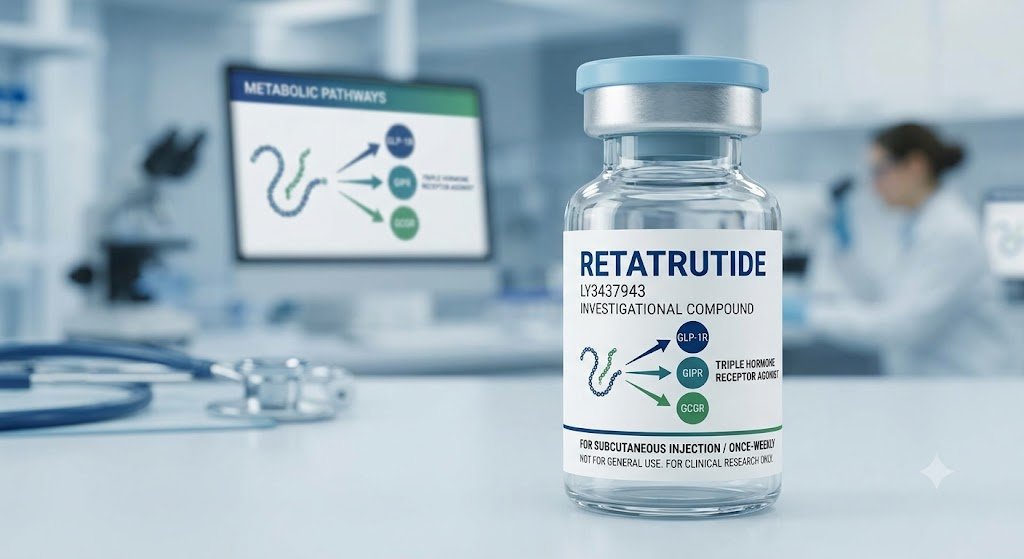
What Retatrutide Does:
Retatrutide is a potent, investigational medication developed by Eli Lilly and Company for the treatment of obesity and type 2 diabetes. While drugs like Ozempic (semaglutide) and Wegovy target only one hormone receptor (GLP-1), Retatrutide is a "triple agonist." This means it works by activating three different hormone pathways simultaneously, which may produce more pronounced effects on weight and metabolism.
Here’s a simplified breakdown of the "triple" effect and how it compares:
GLP-1 Receptor Agonist: Like Ozempic, Retatrutide mimics the GLP-1 (glucagon-like peptide-1) hormone. This reduces appetite and slows digestion, making you feel fuller for longer. It also helps to improve insulin sensitivity.
GIP Receptor Agonist: It also mimics GIP (glucose-dependent insulinotropic polypeptide). This further enhances the effects of GLP-1 on blood sugar and appetite and is thought to play a role in how the body processes and stores fat.
Glucagon Receptor Agonist: This is the most unique and distinctive component of Retatrutide. By acting on the glucagon receptor, it has been shown to increase resting energy expenditure, effectively burning more calories at rest. It also promotes fat breakdown and reduces liver fat.
Summary of Action:
Retatrutide is often described using a "brake and gas" analogy for metabolism. If GLP-1 and GIP drugs "press the brake" on appetite and calorie intake, Retatrutide does both that and "gently presses the gas pedal" on metabolism, causing the body to burn more calories even without exertion.
Due to this triple effect, early clinical trial data has shown very promising weight loss results, often exceeding that of current single- or dual-hormone medications. It is typically administered as a once-weekly injection. Retatrutide is currently in late-stage Phase 3 clinical trials and has not yet received FDA approval for general consumer use.
What Retatrutide Does:
Retatrutide is a potent, investigational medication developed by Eli Lilly and Company for the treatment of obesity and type 2 diabetes. While drugs like Ozempic (semaglutide) and Wegovy target only one hormone receptor (GLP-1), Retatrutide is a "triple agonist." This means it works by activating three different hormone pathways simultaneously, which may produce more pronounced effects on weight and metabolism.
Here’s a simplified breakdown of the "triple" effect and how it compares:
GLP-1 Receptor Agonist: Like Ozempic, Retatrutide mimics the GLP-1 (glucagon-like peptide-1) hormone. This reduces appetite and slows digestion, making you feel fuller for longer. It also helps to improve insulin sensitivity.
GIP Receptor Agonist: It also mimics GIP (glucose-dependent insulinotropic polypeptide). This further enhances the effects of GLP-1 on blood sugar and appetite and is thought to play a role in how the body processes and stores fat.
Glucagon Receptor Agonist: This is the most unique and distinctive component of Retatrutide. By acting on the glucagon receptor, it has been shown to increase resting energy expenditure, effectively burning more calories at rest. It also promotes fat breakdown and reduces liver fat.
Summary of Action:
Retatrutide is often described using a "brake and gas" analogy for metabolism. If GLP-1 and GIP drugs "press the brake" on appetite and calorie intake, Retatrutide does both that and "gently presses the gas pedal" on metabolism, causing the body to burn more calories even without exertion.
Due to this triple effect, early clinical trial data has shown very promising weight loss results, often exceeding that of current single- or dual-hormone medications. It is typically administered as a once-weekly injection. Retatrutide is currently in late-stage Phase 3 clinical trials and has not yet received FDA approval for general consumer use.
Follow Us on Social